5 signs of a well-made garment
in a sea of polyester, here’s how to find the good stuff
(originally published March 2026 via substack)
We’ve been talking a lot this past month about secondhand shopping. You may be interested in trying it, but be confused about which items are actually high-quality enough to buy. You’ll be able to spot some of these signs even on online secondhand sites, but some will only work in person.
Here are a few of the things I look for:
Fabric feel. This is the most important thing, and unfortunately, it probably rules out the majority of the items you’ll find in a thrift store these days. A nice quality fabric will feel softer, smoother, and more durable.
Fabric content. If the fabric feels OK to you, but you’re still wondering whether it’s a synthetic, check the fabric content on the label inside the seam. If it’s a natural fiber, such as wool, cotton, linen, or silk, congrats, you’ve hit the thrift lottery! With the proliferation of fast fashion over the last 20 years, more and more of what ends up in thrift stores is made of fully synthetic fabrics. These days, you’re lucky even if you find something that has a natural fiber blend blended with some other synthetic fabrics.
Stitching. A well-made garment will have stitching that is straight and the stitches will be smaller and closer together. Good quality thread is expensive and lower quality garments will have lower quality thread and less of it.
I’ve included garment photos below so you can actually see what to look for in the wild.
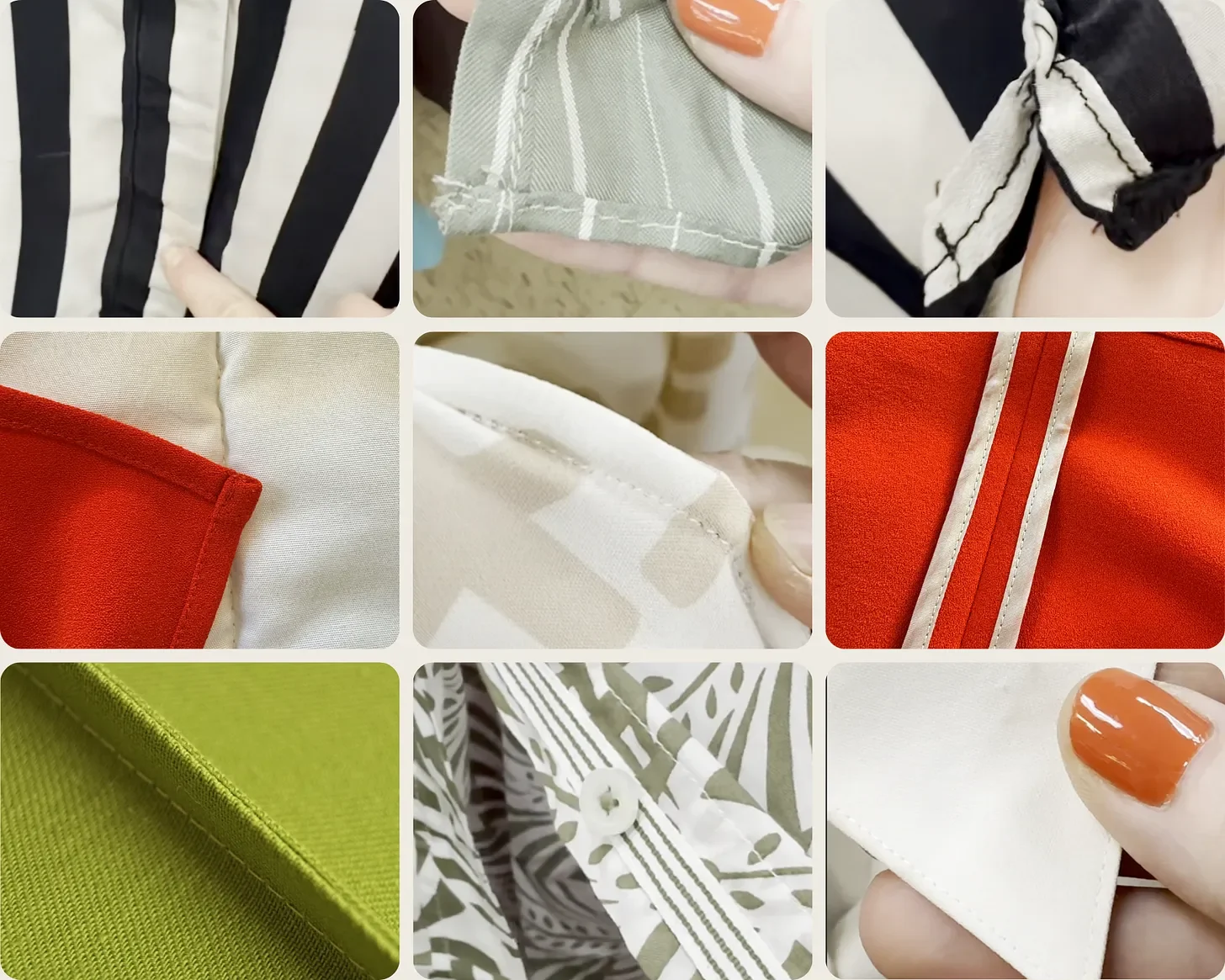
First row from left — 1: placket not laying flat, 2 & 3: low quality hem and finishing. Second row from left — 4: nicely finished hem on a Rachel Comey blouse, 5: French seam on a Joie blouse, 6: bias binding seam on same Rachel Comey blouse. Third row from left — 7: better view of a French seam (image credit), 8: extra finishing detail in the grosgrain ribbon on a Talbots shirt, 9: small straight quality stitches on a Brooks Brothers shirt.
4. Finishings. Look at the inside of the garment: the seams, the hem, and the neckline. You want to see fabric that is nicely finished. This means that the stitching is even, that there are no raw or fraying edges to the fabric, and everything is neat and tidy. Hems should have been turned under twice before being sewn. A couple of the nicest versions of inside seams are French seams and bias binding seams, images 5, 6, and 7 above.
5. Fabric drape. Look at how the fabric hangs and drapes. One of the big giveaways to me is when the fabric in garment hems and plackets (the part where the buttons of a shirt are) of a garment are bubbly and not lying flat.
This excellent article from Elizabeth Joy goes into even more detail with industry experts weighing in.
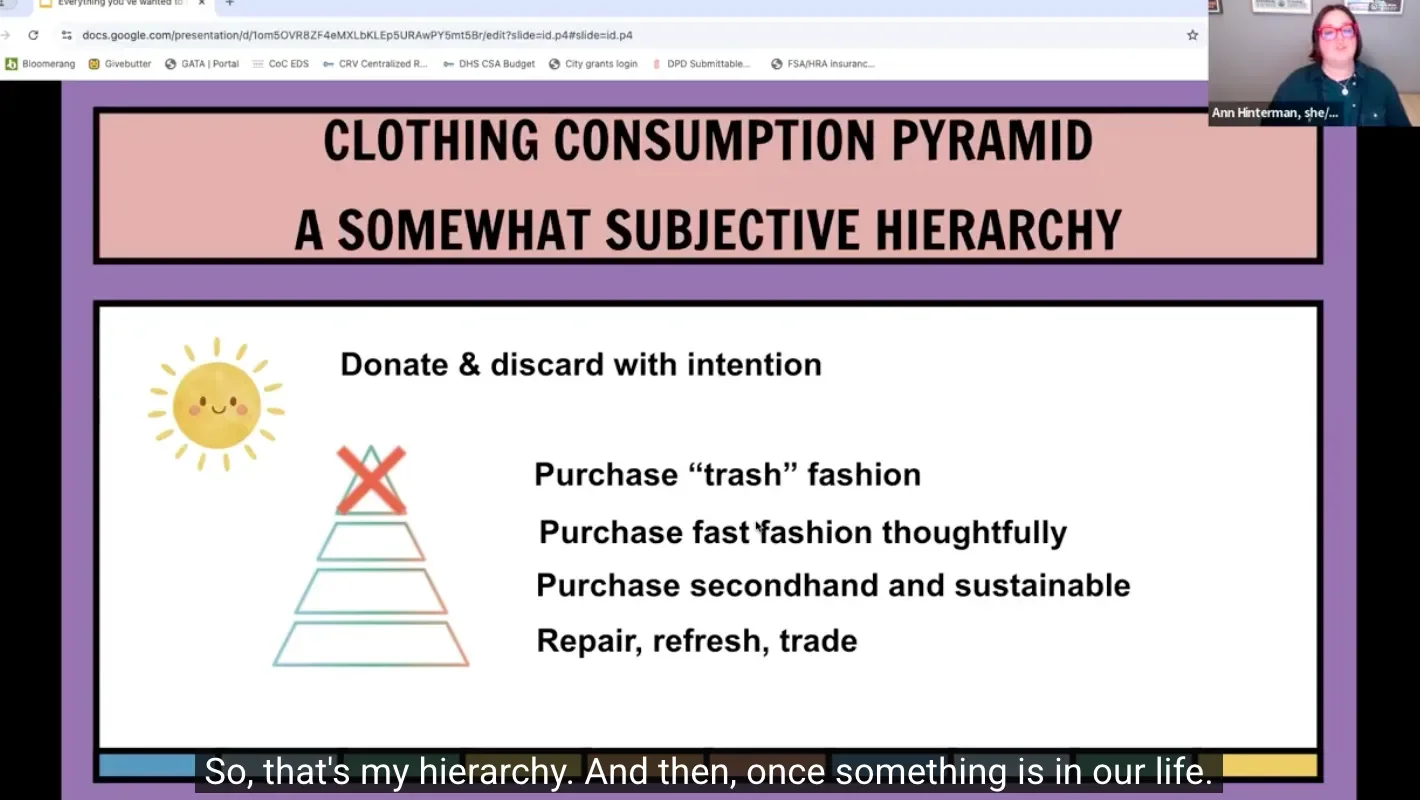
And this talk by unflattering community member, sewist, and clothing repairperson Ann Hinterman goes deep into what all those synthetic fabrics are made of and answers the age old question “why is my sweater pilling?”
I know we have lots of fabric experts in the unflattering community, so please share your best tips as well!
If you thrift regularly, what’s your personal “instant yes” or “immediate no” when you’re scanning a rack? I’m always curious what other people notice first.